PABLO TS PHOTO
Havana is Havana
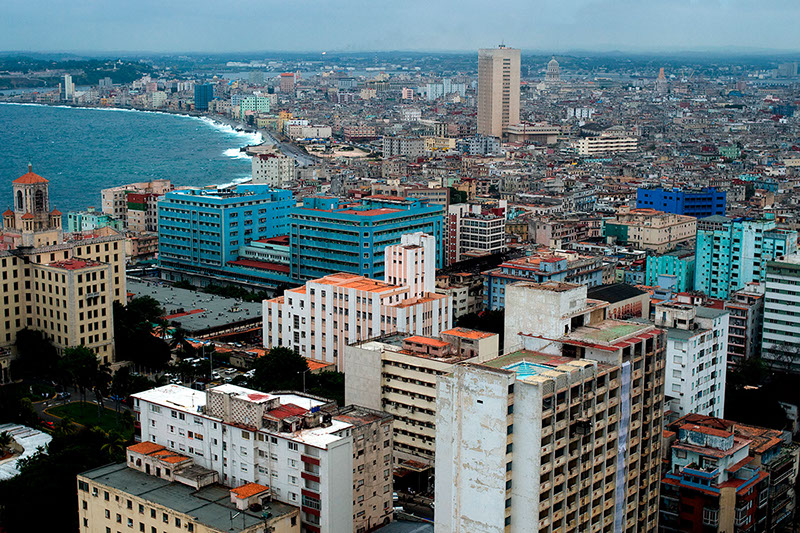
Havana is one of the most important cities in the world. The City Historian, Eusebio Leal, ranks it among the five most beautiful on the planet: “I have traveled quite a bit and have been able to compare cities. García Márquez has stated that Havana is one of the most beautiful cities in the world. Hemingway used to say that only Venice and Paris were superior. I am fascinated by Paris, and I like Venice very much, but I wouldn’t trade either of them for Havana. Havana is a city with a powerful pull; it possesses its own mysteries, its own wonders, its own charm, and its own secrets. Along a single route—from the Castillo de la Fuerza to the far reaches of Miramar, following the Malecón and Fifth Avenue—one can trace the entire history of its founding and development. Whether viewed from the air or explored on foot, it is clearly a city that was thoughtfully conceived—as if it were the result of a convergence of aspirations over time. It is not a chaotic jumble, but rather possesses the grace characteristic of great cities. Havana has so much to offer.”
WHY IS HAVANA, HAVANA?
Many travelers have passed through Havana. Chroniclers from the colonial era—dating back to long ago—praised this great city, which seemed destined by both gods and men. In 1622, the friar Antonio Vázquez de Espinosa, while stopping over in the city, described it as a paradise—an environment perfectly suited to the higher pursuits of the human spirit.
Havana is the “Key to the New World and bulwark of the West Indies”—a designation established by royal decree on May 24, 1534. This concept, inscribed in golden letters, led to the implementation of massive defensive measures, transforming the city into the most heavily fortified and impregnable stronghold on the continent. (E. Leal)
For more than three centuries, the port of Havana served as Spain’s shipyard—a port of call for the "Gold Fleet," laden with gold, silver, and precious stones destined to enrich Europe. Driven by gold fever and an intense, restless ambition that captivated the imaginations of the conquistadors, Havana established itself as the heart and center of the Americas. It was described as "a large, safe harbor where all the ships and fleets from New Spain, the mainland, and Honduras—carrying all their riches—would arrive; it is the key and gateway to the Bahamas Channel." (Report to King Philip II, 1572)
Fernando Ortiz referred to it as the "Seville" or "Babylon" of the Americas—a place of unparalleled allure and entertainment. At certain pivotal moments in history, specific circumstances have created "crossroads" where civilizations converge during eras of great development and prosperity. Egypt, Syria, Palestine, Mesopotamia, Greece, Rome, and Spain are prime examples; yet, none of these ancient crossroads could match the modernity that Havana would come to possess.
"Oh, illustrious Havana—a secure treasury, a resting place for the greatest riches the universe has ever seen. I am aware not only of what you are, but of your immense intrinsic value. Oh, Havana—the youngest of the Americas—your formal grandeur shall ensure your renown throughout the centuries to come." (This was the assessment of Havana offered in 1663 by Francisco Dávila Orejón, Governor and Captain General of Cuba.)
Because of the capital’s immense importance, the most formidable system of fortifications in the New World was constructed there. Its crown jewel was the Morro-Cabaña complex—a cyclopean fortress so imposing that King Charles III, from the balcony of his palace in Spain, is said to have raised a spyglass to gaze upon the towering walls of La Cabaña—a project that had come at such a great cost. From that time on, Havana became one of the world’s major cities—more populous and highly regarded than Boston, New York, or Philadelphia. The sugar boom transformed Havana from a mere transit point into a vital terminal. By the end of the 18th century, some thousand ships were entering the bay to load sugar and unload merchandise. On two separate occasions, thanks to sugar sales, Havana became the wealthiest city on the entire planet; its fortresses and opulent, palatial mansions bear witness to this.
Havana was quick to adopt global innovations—the railroad, the telephone, electricity, cinema, radio, and television—long before many other countries in Latin America. Its material and cultural wealth flourished through the intersection of diverse cultures: a meeting and synthesis—a kaleidoscope from which a lush, vibrant, and universal culture emerged.
“Those who were best informed knew that Cuba had been Spain’s most cultured colony—the only one that was truly cultured—and that the tradition of literary salons and *juegos florales* (literary competitions) remained untarnished. Magazines dedicated to arts and literature were published. Endless radio serials were broadcast, alongside the works of Lezama Lima and the paintings of Amelia Peláez and Wifredo Lam—a reality that felt almost mythical.” (Gabriel García Márquez, *First Visit to Havana*)
It is well known that Havana was, historically, the premier theatrical stronghold of the Americas. “Let’s conquer the Americas”—a phrase often repeated by directors, impresarios, and artists—frequently saw Havana chosen as the starting point for their tours. The city boasted a sophisticated, discerning audience; those who could not succeed in Havana were unlikely to find success in other capitals.
Cuba has played host to a wide array of notable figures: from explorers like Christopher Columbus and scientific geniuses like Albert Einstein to world leaders and renowned artists. The island welcomed the most celebrated singers, musicians, and comedians from Spain, Italy, and France. Even today, many artists aspire to perform in Havana, often covering their own expenses to do so.
In short, during the early 20th century, Havana was a city defined by its abundance of theaters, cabarets, bars, and cinemas. As Alejo Carpentier observed: “Havana possesses a privilege known only to the world’s great capitals. Its streets are a perpetual spectacle—a blend of theater, caricature, drama, comedy, and more. It is filled with living substance, humanity, and striking contrasts that delight any observer.”
Havana is more than just its history, culture, and heritage; it is, above all, its people—those who breathe life into this great city and ensure its enduring presence. After all, Havana is, quite simply, Havana.
- Rafael Lam
All Rights Reserved | Pablo Tarrero ©1992/2026